Archive by Author

Architecture in Nairobi


I went to Nairobi for the first time earlier this year. The first the thing I noticed were the grim outlines of the Marabou Storks. The second thing I noticed were the blue windows.

I don’t know if it’s custom tinted glass or whether the local factory is still working towards transparency.  But I haven’t seen windows like these before.

I always like to see iconic styles emerge that aren’t linked to tradition. If it proliferates, I think these windows could become a defining feature of Nairobi.

Why Afrikaans needs vampiere and ongediertes

Vampire by Vyle

Afrikaans faces a dilemma. How can it remain relevant to a younger generation while maintaining linguistic standards?

Writers of Afrikaans teen fiction are using slang and English words in order to appeal to the youth. Purists obviously see this as a debasement of the language. It’s known as taalvermenging , a contentious issue that regularly pops up on the letters page of newspapers. Back in 2002, a 17-year-old Jackie Nagtegaal published Daar’s vis in die punch and sparked a debate that divided literature professors.  André Brink called it a rejuvenation of the language while Dan Roodt said that Afrikaans had hit an all-time low.

Part of the problem is that Afrikaans caries a historical burden. Because it is spoken by a community that supported a racist system, the language is tinged with verkramptheid. To many, Afrikaans is still associated with conservative white people even though that connotation is statistically inaccurate* . When an actor speaks an old-fashioned English dialect, he sounds sophisticated, even romantic. If he speaks formal Afrikaans , he’ll seem conservative and unfashionable.

So is it possible to side step these negative connotations? I think so.

It should be possible to get a young audience to warm to formal Afrikaans if it’s a dialect so antique that it isn’t associated with their parents and grandparents’ generation.  An interesting example of this trick is seen in HBO’s True Blood.

Bill Compton is the romantic lead in the show. He’s also a vampire that once lived as a human in mid-19th-century Louisiana and fought for the South in the Civil War. That means he’s a confederate soldier with an accent that makes you think of a front-porch-sittin’ slave owner. But all of the potentially hazardous connotations are somehow sidestepped because he’s a vampire, and chivalrous, and 160 years old.

So Radio Sonder Grense should consider creating a radio drama with a teen novel tie-in about dashing vampires and beasts set in a contemporary South African town. It shouldn’t be a Twilight knock-off, but it will need a good dose of young love and drama.

The supernatural beings are all a century old, which explains their use of old-fashioned Afrikaans. In fact, there’s the potential to base their dialect on the writing style of N.P. van Wyk Louw. He was part of the Dertigers, an innovative group of Afrikaans poets who gained notoriety in the early decades of the 20th century. Louw’s work often explored love and sensuality via supernatural imagery. Gestaltes en Diere, published in 1942, portrays dark leopards, alcoholics, sphinxes and wolves. It’s an ideal foundation for a new fantasy series.

I’ll leave you with a cool passage from “Ballade van die nagtelike ure” :

Om elfuur was jou liggaam
die honger en dors in my,
as jou skewe papier-kalot
ver deur die danssaal gly.
Om twaalfuur was jy ‘n ligte brug,
‘n hoë, gevaarlike gang
bo my klein verwildering
tussen pyn en sterwe gehang.
- N.P. van Wyk Louw 1937

* A 2002 survey revealed that of the six million South Africans who claim Afrikaans as their first language, only 42% are white  (Giliomee, 2004: 623).

Authenticity is the new exclusivity

In a recent Times Live article, Jackie May longs for the days before mass production ruined luxury goods by making it accessible to the middle class. Here’s an extract:

In a world of mass production, globalisation and conspicuous consumption, where access to a Louis Vuitton or a Prada handbag is no longer restricted to the super-rich, there is a nostalgia for what used to be defined as luxury.
[…] It’s a nostalgia for when consumption was less conspicuous and less prevalent, and excess not so wretched and hedonistic.

When was this pre-conspicuous era? She suggests the 19th century as the answer, a time when artisans created finely made wares for royalty and aristocrats. The only ones keeping this tradition alive now are the modern-day artisans who create “authentic” goods with their hands, independently fighting consumerism.

But hold on, wasn’t the term “conspicuous consumption” coined in the 19th century? Wasn’t it in that era of precious utensils and golden watches that Thorstein Veblen pointed out that the wealthy enjoyed these socially visible goods due to their price and scarcity? These days, gold and silver doesn’t cut it though. Even designer bags ain’t what they used to be. It doesn’t have the same meaning it once did, says May in the article, ever since “global corporations [sold it] to the middle market”. Is it possible, just maybe, that what’s been lost is not quality or tradition but the feeling of exclusivity?

It looks like the real annoyance here is that a luxury good like a Prada handbag no longer gives the owner the sense of distinction that it once did. It’s not that different from music snobs that complain when their favourite band goes mainstream.

So how’s a status-seeking individual supposed to get their exclusivity-fix these days? By buying handmade goods that are inevitably rare because they’re produced in small batches. So handmade axes, craft beer and artisanal bagels are now in.

If you’re into that “authentic” stuff, have a ball, but don’t pretend that it’s the antithesis of consumerism and status seeking. The search for authentic artisanal goods is an extension of conspicuous consumption, not its cure.


Lake of Stars could be even better


I’ve dedicated two previous blog pieces to what was cool about the Lake of Stars experience. Now in this final instalment, I’ll dish out some constructive criticism.  Here are three ways it could be even be better:

#1 Make it easier to get there
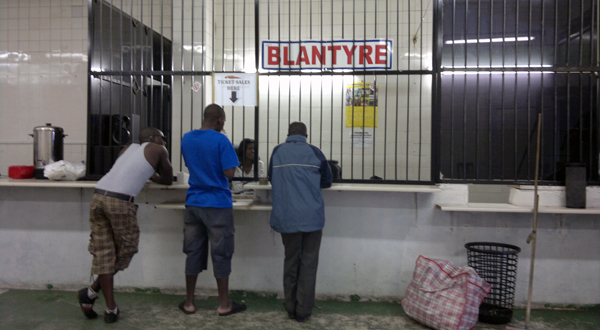
The big problem here is that flights, much like bandwidth, are still too expensive across Africa. A flight from Johannesburg to Blantyre costs R5,100. You know where else you could fly with that money? Milan.

There is hope though. 1Time has announced that it will offer flights to Kenya this year at a cheap R1,619. SAA currently offers the same flight at the might-as-well-fly-to-New-York -and-back price of R8,338. Hopefully we’ll see cheaper flights to East and West Africa in the next few years.

At half the price of a plane ticket, the festival organised a special bus from Johannesburg, but only two festival-goers made use of this. I was one of them. It was a trip full of highlights and trouble, but never dull.

I hope they don’t cancel the bus this year. If organized and promoted properly, it could become a jolly, music-filled bus ride,  similar to the MK Avontoer.

On the local level, transport could also be easier between the resorts in Mangochi .  If your lodging wasn’t at the festival site, getting home at night was tricky and unreliable. An hourly shuttle service could solve this.


#2 Make it easier to spend money

If you’re running a business, one of the things you don’t want is a shortage of ATMs and credit card facilities. There was only one ATM at the festival and when it inevitably stopped working, the only other ATM for miles was in town. To get to town, you’d have to pay for a taxi. So if you happened to be broke, as most ATM-seekers are, you’d find yourself in a proper Catch-22.

The only place I could find where you could pay for food or drink with a credit card was the Nkopola restaurant.  And even they treated a credit card transaction like a strange and inconvenient custom. Paying took a long time, and you had to do it at the front desk. Once the payment went through, a letter, not a receipt, was printed out for you to formally sign. It ultimately became amusing, something to joke about with the receptionist.


#3 Make it like Ibiza

Wait, hear me out first. I’m not suggesting it should imitate Ibiza’s electronic dance music or its island-of-vice reputation.  Lake of Stars should strive to have the cultural significance of Ibiza. In the same way Ibiza incubated the Balearic Beat in the 80s, Malawi could be the playground of an emerging sound. It could be a place where musicians showcase new material, learn from one another and compete. Sometimes, isolation breeds innovation. We’ve seen influential music scenes develop in peripheral places like Seattle, Manchester and Bellville. Let Mangochi be the next.